Working with facility managers, we have learned that choosing a floor coating usually starts with the wrong question. They come to us with a product already in mind, epoxy, polyaspartic, or polyurea, and ask whether it is any good. The better question is whether it suits their floor and how they use it.
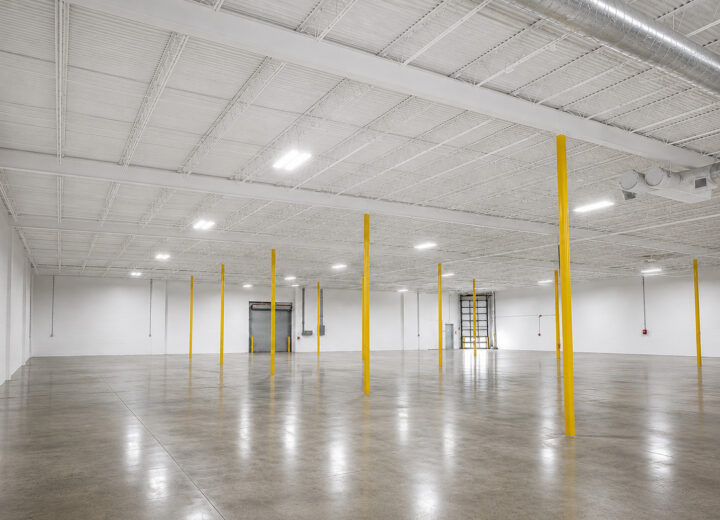
After more than 5,500 projects since 2001, Performance Painting has seen how much that answer varies. We have coated warehouse slabs, hangar floors, commercial kitchens, condo garages, and a Navy base in Jacksonville. There, we ground the existing concrete and installed a coating system to military specification.
Different buildings, different demands, same lesson every time. All three perform well in the right conditions. In the wrong conditions, problems show up fast. A coating system exposed to chemicals it was not designed to handle can fail prematurely. A rigid epoxy system over a moving slab can crack along with the concrete.
The floor decides. Not the product.
Five Questions Our Team Asks Before Recommending a Floor Coating
What Rolls Across It?
Foot traffic, steel-wheeled pallet jacks, and hot tires are three different loading problems.
What Gets Spilled on It?
Chemical exposure narrows the field faster than anything else on this list.
How Long Can the Space Close?
The cheaper coating that closes a line for four extra days ends up being the expensive one.
What Does It Need to Look Like?
Showroom floors and mechanical rooms are held to different standards.
What Is the Space Actually For?
A hospital corridor, a brewery, and a parking deck all have concrete floors. Beyond that, their requirements have very little in common.
Once we have those answers, the choice gets easier. Each system solves a different problem, and the right one depends on what the floor faces every day.
Epoxy: The Workhorse
Epoxy is a two-part thermoset that bonds strongly to properly prepared concrete and resists a broad range of chemicals. High-build epoxy systems can add substantial film thickness and help smooth a worn or uneven slab.
Plan around two things: cure time and UV exposure. Compared with fast-cure systems, many epoxies require longer cure windows, often including overnight between coats and extra time before full service. Many conventional epoxy systems are not UV stable and can amber over time in sunlight-exposed areas.
Polyaspartic: When Downtime Is the Real Cost
Polyaspartic coatings are fast-curing systems known for UV stability, abrasion resistance, and short return-to-service times. Many can return to foot traffic the same day and hold color and gloss in sunlight. For a dealership, a school project over a weekend, or a hangar needing aircraft inside by Monday, that faster return can matter more than material cost differences.
That fast cure leaves little margin for installation error. Working time is short, and mistakes are difficult to correct once the coating sets. Polyaspartic coatings are commonly used as finish coats, so proper slab preparation and repairs still matter.
Polyurea: Movement and Containment
Spray-applied polyurea systems use plural-component equipment and cure extremely quickly. Their high elongation allows them to accommodate more movement than rigid coating systems. That flexibility makes polyurea useful in systems designed to accommodate movement and provide waterproofing or containment, including tank linings and deck applications.
It is also unforgiving: no working time, specialized equipment, and aromatic versions need an aliphatic topcoat wherever daylight reaches.
How Epoxy, Polyaspartic, and Polyurea Compare
| Factor | Epoxy | Polyaspartic | Polyurea |
|---|---|---|---|
| Traffic | Heavy industrial and forklift traffic | Vehicle, retail, and foot traffic | Impact and movement applications |
| Chemical resistance | Strong; varies by formulation | Strong; varies by formulation | Often used in containment systems |
| Downtime | Typically, longer cure windows | Often faster return to service | Very fast cure; prep-dependent |
| UV & appearance | Many systems can amber | Strong color and gloss retention | UV protection may be needed |
| Film build | High-build systems available | Often used as a topcoat | Varies by system |
| Slab movement | More rigid | Some flexibility | High elongation; system-dependent |
Why Hybrid Coating Systems Make Sense
Here is the part product marketing leaves out. On many commercial projects, more than one coating chemistry may be used as part of the complete system.
One common approach is an epoxy base coat for build and chemical resistance, topped with polyaspartic for UV stability and faster return to service.
That is a specification decision, not a product choice. Our floor coating scope covers epoxy, polyaspartic, polyurea, flake finishes, and multi-component systems.
What Florida Adds
Moisture is an important factor when specifying floor coatings in Florida. Concrete slabs can transmit moisture vapor, and when moisture levels are not properly accounted for, the coating may lose adhesion, blister, or lift over time.
That is why the slab condition should be evaluated before specifying a coating system. Depending on the results and space requirements, moisture testing or a moisture-mitigating primer may be recommended before installing the finish system.
For Jacksonville facilities, choosing the right coating means looking beyond the product itself. The slab condition, moisture exposure, surface preparation, and intended use all need to be part of the specification.
Prep Decides More Than the Product
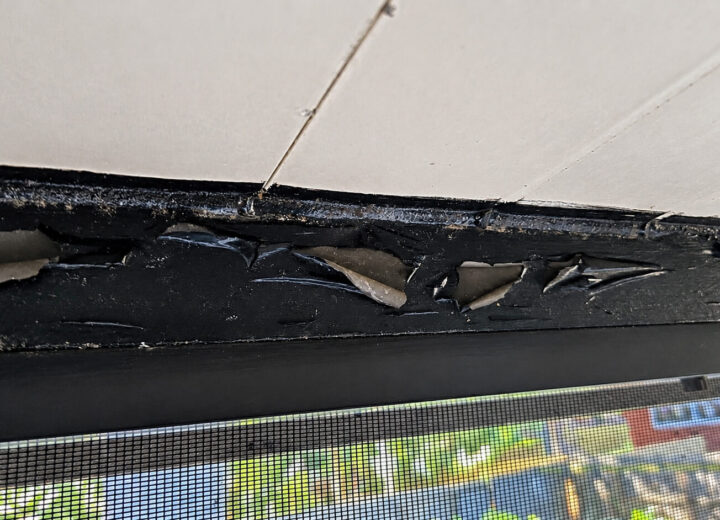
Many failed floors we assess have one thing in common: inadequate surface preparation.
Proper surface preparation is critical to coating adhesion. Depending on the slab and system, this may include grinding or shot blasting to create the required surface profile, removing laitance and contaminants, and repairing cracks before coating.
We applied that standard at a Navy base in Jacksonville, grinding the existing slab before applying a high-performance epoxy system. The floor passed inspection and returned to heavy daily use.
Which System Fits Your Facility
Here is how those considerations typically play out by facility type:
-
Warehouses and manufacturing:
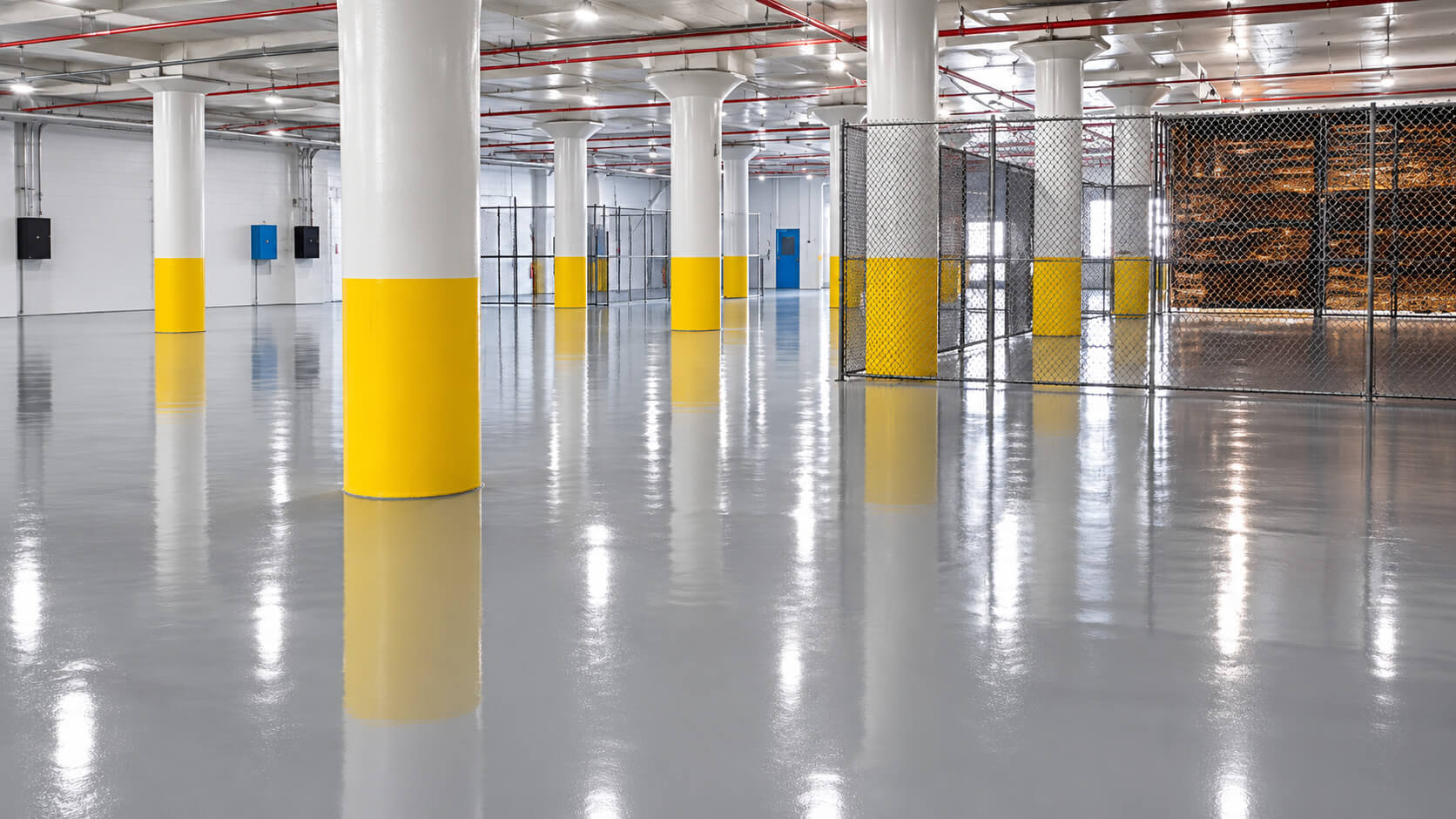
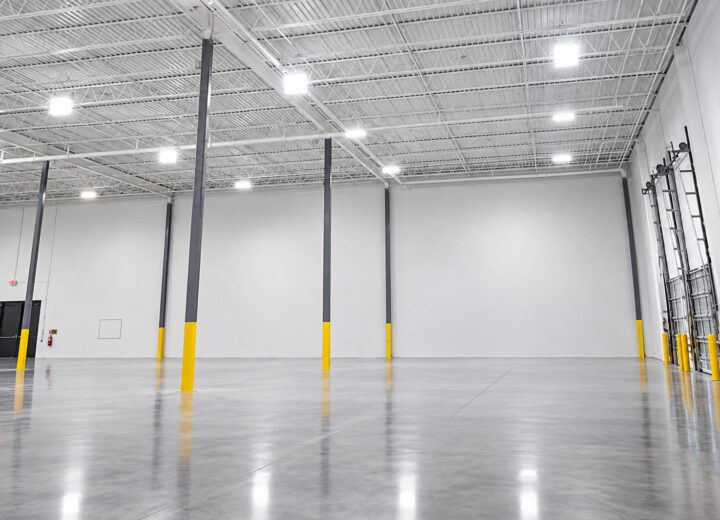
Heavy equipment, abrasion, chemical exposure, and slip resistance drive the specification. High-build epoxy and durable topcoat systems are common options, with aggregate added where extra traction is needed. See our warehouse projects. -
Dealerships and retail:
Appearance, UV exposure, traffic, and short installation windows matter. Polyaspartic and decorative-flake systems are common options. -
Hangars:
Fuel and hydraulic-fluid exposure, aircraft traffic, appearance, and turnaround time all influence the system. Epoxy and fast-cure topcoat systems are common options. -
Kitchens and food production:
Thermal shock, wash-down chemicals, sanitation requirements, and slip resistance are often key specification factors. -
Parking decks and condo garages:
Movement, waterproofing, vehicle traffic, and exposure conditions are major specification factors.
Frequently Asked Questions
-
Is polyaspartic better than epoxy?
Neither wins in general. Polyaspartic offers faster cure times and better UV color stability, while high-build epoxy systems provide greater film build and strong chemical resistance. On many commercial projects, the two can be used together as part of a multi-coat system. -
Why do floor coatings peel or bubble?
Inadequate surface preparation and moisture vapor through the slab are common causes. Proper slab evaluation, moisture testing where appropriate, and surface preparation can significantly reduce those risks. -
Can you coat a floor while we stay open?
Depending on the facility and coating system, projects can often be phased to reduce disruption.
Let’s Look at Your Floor
We will evaluate your facility, assess the slab’s condition and demands, and recommend a system tailored to how the space is actually used. Every commercial project is overseen by an OSHA-certified job leader.
Request a quote or call (904) 641-4800.