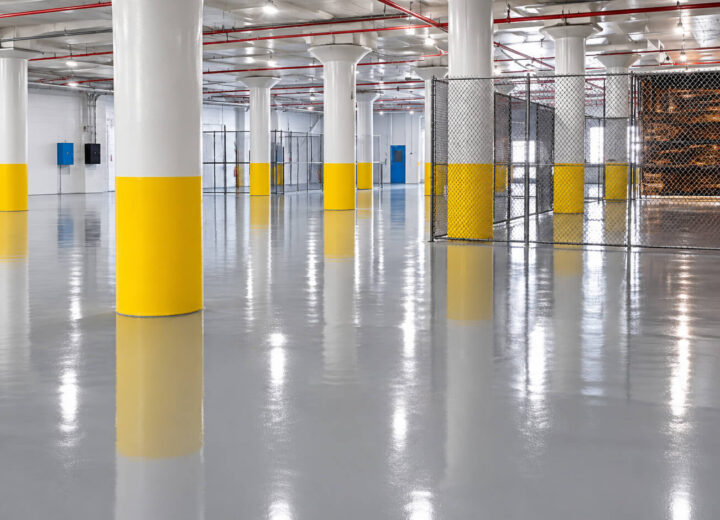
In busy warehouses and manufacturing plants across Northeast Florida, color is part of the everyday environment. Yellow lines guide people through the facility, red tags highlight locked-out equipment, painted pipes run above the work area, and bright markings help workers recognize where they need to be more careful.
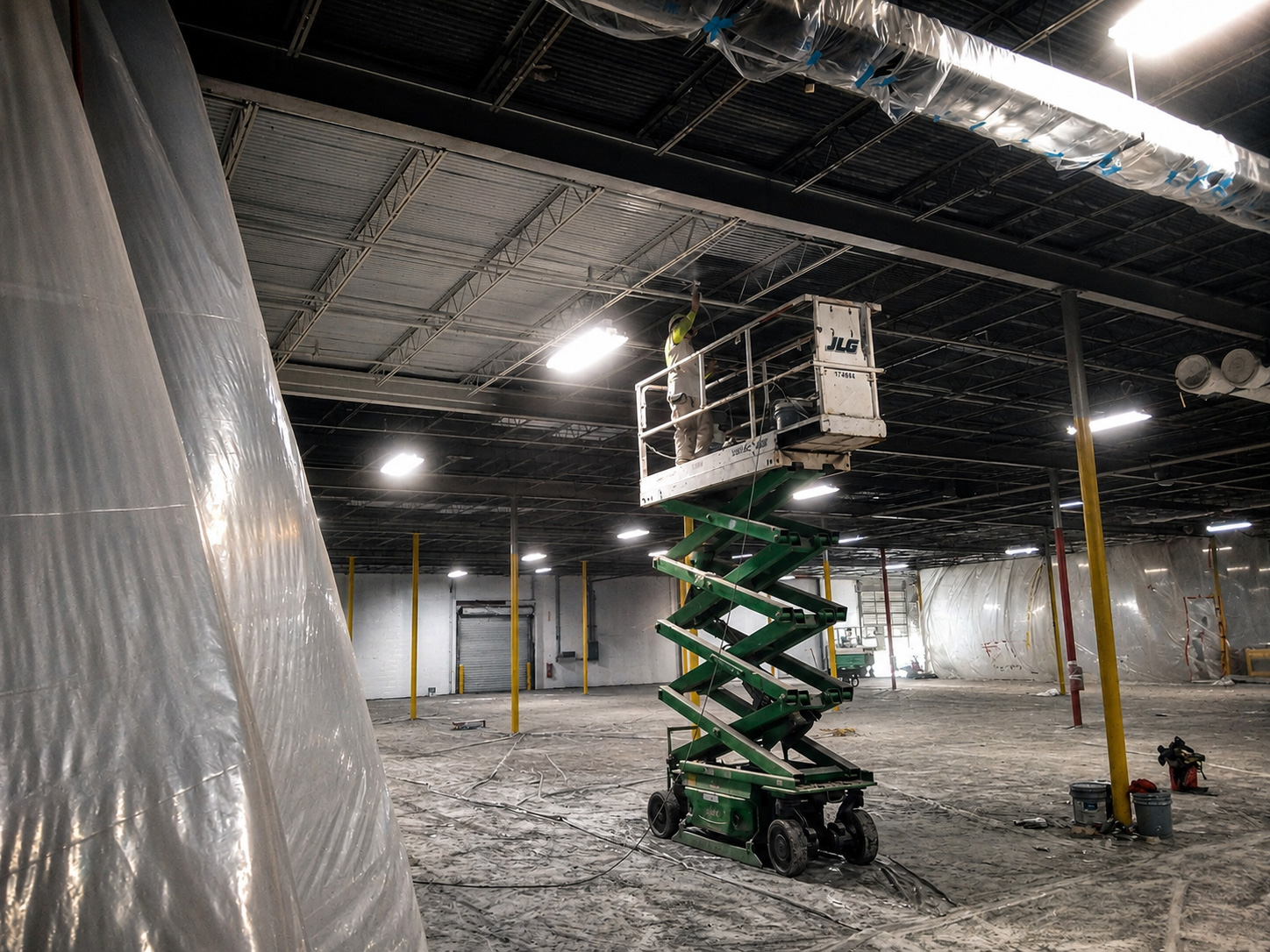
At Performance Painting, our industrial painting, floor coating, and safety compliance crews are often called to refresh or install these systems. From warehouse striping and floor markings to fire, sprinkler, and chemical pipes, bollards, nonslip floors, curbing, and secondary containment areas, we have seen how a well-planned, well-maintained color-coding system improves safety, visibility, and organization throughout a facility.
Here is what goes into an effective color-coding system, and why it matters more than many people realize.
Color-Coding Pipes, Hazards, and Restricted Areas in Industrial Facilities
In facilities with multiple piping systems, such as water, steam, compressed air, fire protection, sprinklers, or chemicals, workers need to quickly identify what they are looking at. Clear pipe marking helps reduce confusion, especially when employees, maintenance crews, or outside contractors are moving through the facility and need to make decisions safely.
Many pipe identification systems follow ASME A13.1 guidelines to ensure labels and markings remain consistent. These markings indicate what a pipe carries, where labels should be placed, how the lettering should appear, and the flow direction. Instead of tracing a pipe back through the building, the right marking system gives the needed information at a glance.
Color coding also helps high-risk areas stand out clearly. Markings around high-voltage equipment, chemical storage areas, tanks, and PPE-required spaces let workers know when they are entering areas that require extra care.
Separating Pedestrian and Equipment Traffic with Floor Markings
Busy industrial facilities rely on movement, but it needs clear direction. In warehousing and manufacturing, forklifts, pallet jacks, employees, and materials often share the same areas, increasing the risk of near misses.
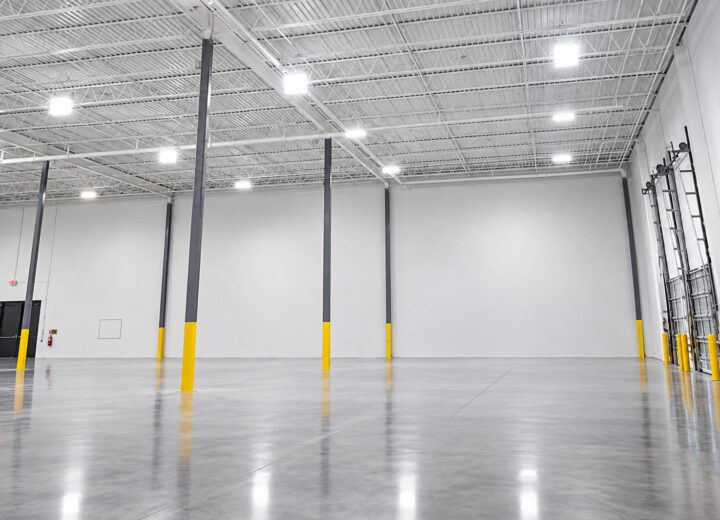
Clear floor markings help separate those spaces. Examples include:
- Warehouse striping
- Pedestrian walkways
- Equipment lanes
- Loading zones
- Parking lot striping
These markings make it easier to see where people, equipment, and materials belong.
When those markings start to fade or wear down, the message becomes less clear.
Industrial Floor Coating: Why Prep Work Determines How Long Markings Last
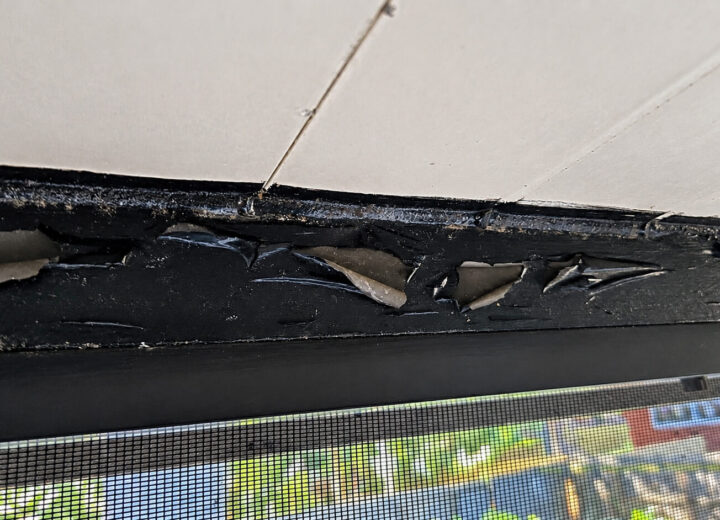
Many facilities run into trouble here. They invest in a good color-coding layout, but the paint or tape wears down within months because the floor was not properly prepped or the coating was not designed for the traffic, chemical exposure, or daily wear the area receives.
This is where professional floor coating and high-performance coating services make a difference.
A few things have a major impact on how long markings last:
- Surface prep: Concrete must be properly cleaned, profiled, and, when needed, ground before coating is applied. Skipping this step is a common reason floor markings fail early.
- Coating selection: Not every coating is built for the same environment. Areas exposed to forklifts, chemicals, moisture, or constant foot traffic need a more durable system to keep markings visible and effective over time.
- Cure time: Rushing a space back into use before the coating has properly cured can shorten its lifespan, even if it looks fine on day one.
Florida’s heat and humidity can make coating selection even more important. A product that performs well in a dry climate may not hold up as well here without the right preparation and product selection. It is worth working with a team that understands local conditions, industrial environments, and the demands of high-traffic facilities.
Safety Marking Maintenance: Common Questions
How often should industrial floor markings be repainted?
The right timing depends on the environment. Floor markings in a quiet storage area may last much longer than those in a forklift lane, loading dock, or production area, which are exposed to heavy use.
As a general rule, facilities should regularly inspect high-traffic markings. If the lines are no longer easy to see, or if the coating is starting to wear, touch-ups or repainting should be scheduled before the markings stop doing their job clearly.
What is the difference between floor tape and floor coating for safety markings?
Floor tape can be a good choice when a layout is temporary or likely to change. It is quick to install and easy to adjust, making it useful in certain facilities.
For areas with heavy equipment, forklift traffic, or constant foot traffic, coated markings are often the better long-term option. They take more preparation and curing time, but when applied correctly, they usually hold up better in demanding industrial environments.
Does OSHA require specific colors for pipe and hazard markings?
OSHA does provide safety color requirements for certain hazards. For example:
- Red is commonly used for danger-related markings.
- Yellow is used for caution-related hazards.
- For aisle markings, OSHA allows some flexibility as long as the markings clearly define the aisle area.
Pipe identification is usually guided by ASME A13.1, which covers details such as:
- Pipe contents
- Label wording
- Placement
- Color
- Letter size
- Flow direction
Because requirements can vary by industry, facility, and application, it is always best to confirm the current standards for your specific environment rather than assume a single color system applies everywhere.
Build a Safer, Clearer Facility
A well-installed and well-maintained color-coding system makes the facility easier to navigate, reduces confusion, helps lower the risk of near misses, and gives new employees a clearer understanding of how to move through the space safely.
It can also reduce the need to repaint the same high-traffic areas repeatedly. With the right surface preparation, coating system, scheduling, and maintenance plan, safety markings can stay visible, durable, and reliable for longer.
Performance Painting helps commercial and industrial facilities improve safety visibility through safety compliance painting, warehouse striping, floor markings, pipe painting, bollards, nonslip floors, curbing, and high-performance coating systems. Our team provides detailed estimates, works around active facility schedules, maintains clean and safe work areas, and helps determine the right coating approach for each space.
If your facility’s markings have faded, or you are setting up a new system from scratch, request a quote and let our team help determine the right marking and coating system for your floors, equipment, and daily operations.